Article | Resources
Why financial institutions need a smarter cash ecosystem
Financial institutions play a critical role in keeping cash accessible, secure, and circulating throughout Canada.
While digital payments continue to grow, cash remains an essential part of the financial ecosystem. Consumers, businesses, retailers, and communities continue to rely on access to cash through branches, ATMs, and financial service providers.
Managing that ecosystem, however, has become increasingly complex.
Today, financial institutions require more than secure cash transportation. They need visibility, forecasting, operational expertise, and a connected approach to managing the full cash lifecycle.
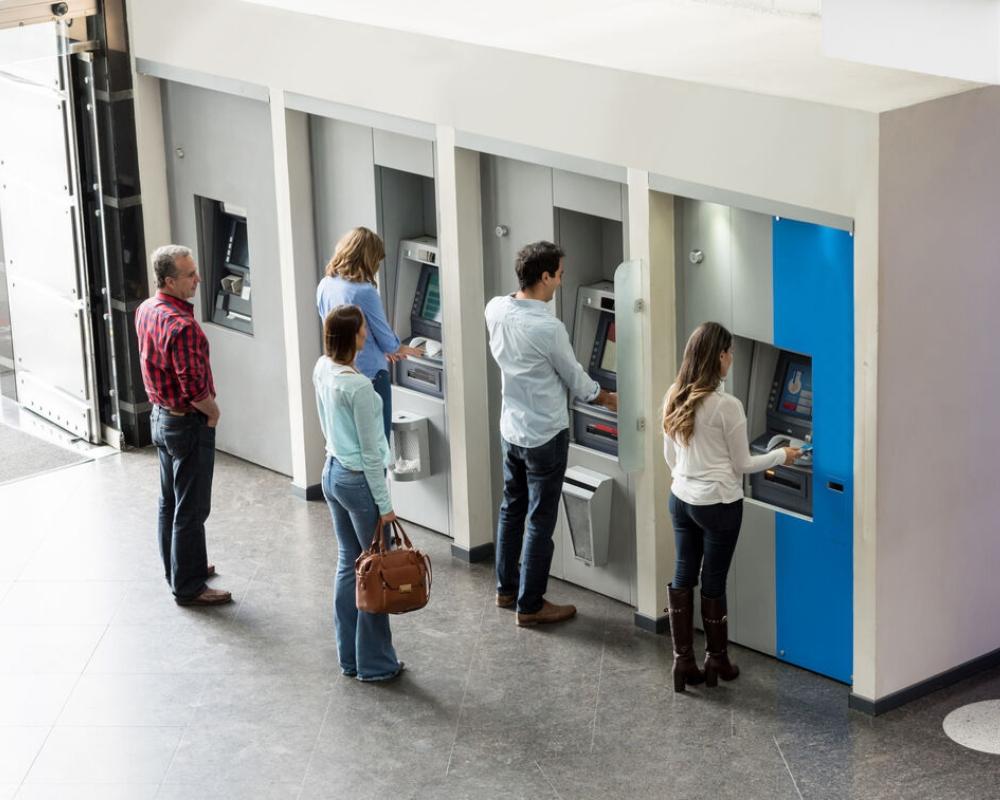
Cash management is becoming more strategic
Historically, cash operations focused primarily on security, transportation, and processing.
Those fundamentals remain essential, but today's financial institutions face new operational demands.
Organizations must balance customer expectations, operational efficiency, regulatory requirements, cash availability, and cost management across extensive branch and ATM networks.
As a result, cash management is becoming a strategic operational function rather than simply a logistical necessity.
Managing cash requires more than physical movement
Moving cash securely remains a critical component of the process.
However, financial institutions increasingly require support across the broader cash ecosystem, including:
- Branch cash operations
- ATM servicing and replenishment
- Vault operations
- Coin processing and recirculation
- Reconciliation
- Cash forecasting
- Treasury management support
- Operational reporting and visibility
Managing these functions independently can create inefficiencies, duplication, and operational complexity.
A connected approach helps simplify operations while strengthening control.
Visibility and forecasting drive better outcomes
One of the most important changes in modern cash management is the growing role of data and forecasting.
Financial institutions need to understand:
- Current cash positions
- Branch cash requirements
- ATM demand patterns
- Deposit activity
- Service performance
- Liquidity needs
Without accurate visibility, cash positioning often becomes reactive.
Forecasting tools and operational intelligence help institutions anticipate demand, optimize inventory levels, and improve the availability of cash throughout their network.
The result is a more efficient and responsive operation.
Trust and infrastructure still matter
Technology alone is not enough.
Financial institutions require trusted infrastructure, secure custody, regulatory compliance, and operational expertise.
The organizations responsible for managing cash must be able to support complex networks while maintaining high standards of security, auditability, and reliability.
That requires national infrastructure, proven processes, and deep industry experience.
In an environment where trust is essential, operational execution remains just as important as technology.
Bridging physical and digital transformation
Financial institutions continue to invest in modernization and digital transformation initiatives.
Cash operations must evolve alongside those efforts.
A smarter cash ecosystem connects physical cash management with modern technology, reporting, automation, forecasting, and operational intelligence.
Rather than viewing cash as a standalone operational function, leading institutions are increasingly treating it as part of a broader strategy to improve efficiency, visibility, and customer service.
The future of cash management
Cash remains an important part of Canada's financial ecosystem.
But the way financial institutions manage cash is changing.
Success increasingly depends on the ability to combine trusted infrastructure, secure custody, operational expertise, and intelligent technology into a connected cash ecosystem.
Because modern cash management is no longer just about moving cash.
It is about managing it more efficiently, intelligently, and strategically across the entire network.